What the Gibraltar Treaty Means If You Own Property Near the Border
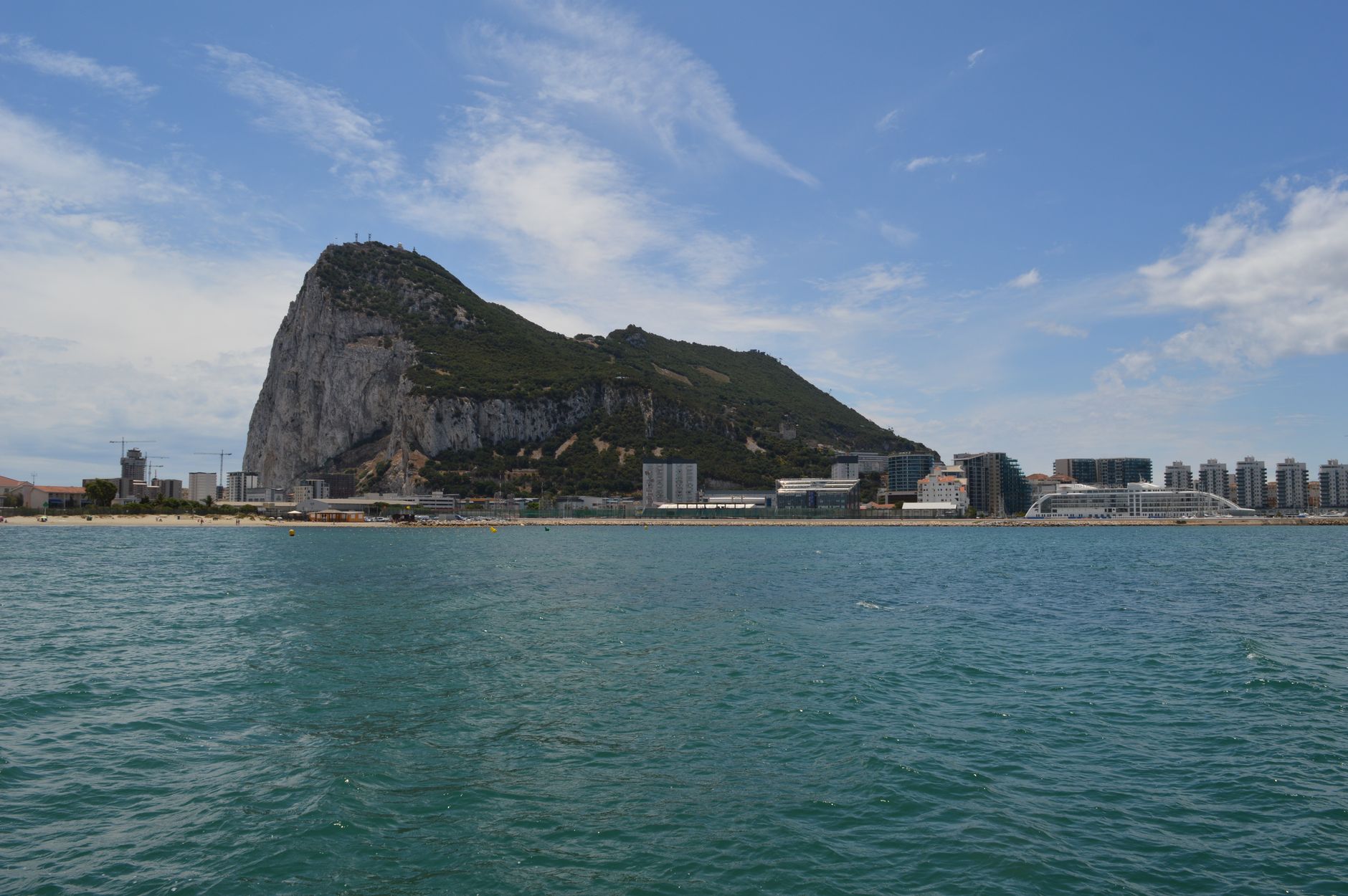
On 15 July 2026 the queue at the Gibraltar frontier stopped being a fact of life on this coast. The routine immigration checks went, and so did the physical control infrastructure that had shaped every commute, every school run and every dinner reservation within twenty miles of it for decades.
If you own property on the Spanish side of that frontier, or you are thinking about it, the sensible question is a narrow one: what actually changed for me? The answer is less dramatic than the headlines and more useful. The treaty changed how you cross. It changed almost nothing about what you own, what you owe, or how long you are allowed to stay.
Both halves of that matter, and the second half is the one people get wrong.
What changed on 15 July
The treaty between the UK and the EU in respect of Gibraltar has been provisionally applied since 15 July 2026, after four years of negotiation. Three things follow from it.
Routine immigration checks at the land frontier with Spain are gone, along with the fence and gate arrangements at the crossing. Crossing between La Línea and Gibraltar is now, in ordinary circumstances, an unremarkable drive.
Schengen entry and exit checks have moved to Gibraltar's airport and, where relevant, its port. Arrivals from outside the Schengen area are processed there, with British and Spanish officers both present. The checks did not disappear; they moved to where the people arriving from outside the area actually arrive.
And a customs union now exists between Gibraltar and the EU, which is a goods question rather than a people question. It matters if you are shipping furniture, materials or a car, and it is worth a conversation with whoever is moving them. It does not affect the house.
What did not change, and this is the important part
Property law did not change. Conveyancing in Spain works exactly as it did on 14 July. The notary, the land registry, the nota simple, the deposit contract, the completion at the notary's office — all unchanged. There is no new procedure for buying near the frontier and no Gibraltar-flavoured shortcut through the Spanish process.
The taxes did not change. Transfer tax on a resale in Andalucía, IVA and stamp duty on a new build, the notary and registry fees, the annual IBI, the non-resident income tax owed even on a home you leave empty — the treaty touches none of it. We set the whole bill out in the real cost of buying in Spain as a non-resident, and every figure in it still stands. The one point worth repeating here, because it catches people who assume proximity implies favour: a Gibraltar resident is taxed on Spanish property income at the same rate as a UK resident, not the EU rate.
The 90/180 rule did not change. This is the single most common misunderstanding we hear. A British passport holder can spend 90 days in any rolling 180-day period in Spain and the wider Schengen area, and the treaty does not extend that by a day. Nor does living in Gibraltar: Gibraltar residence does not create a right to live in Spain.
There is a genuine nuance underneath it, and it is the useful kind. Gibraltar itself is outside Schengen, so time spent in Gibraltar does not count against your 90 days. Time spent in Spain does. For an owner who splits their time, that distinction is worth understanding properly rather than assuming either way.
And the border still exists. The absence of a routine check is not the absence of a rule. Customs law, policing and targeted enforcement all continue at the frontier. Nobody should read an open crossing as permission to overstay a limit that is still counted.
What it genuinely changes for an owner
The honest list is short, and it is about time rather than money.
The commute is the big one. For anyone living on the Spanish side and working in Gibraltar, the frontier queue was never a fixed cost — it was an unpredictable one, and unpredictability is what makes a commute intolerable. A crossing that might take five minutes or fifty is a different proposition from one that takes five. That single change does more to make the Campo de Gibraltar liveable for Gibraltar-based professionals than any amount of new construction.
For the second-home owner who flies in, the practical difference is where you are processed. You clear entry at Gibraltar's airport rather than sitting at the frontier afterwards, which makes arriving late on a Friday a far less miserable experience than it used to be.
For everyone else — the buyer who wants a golf house, a sea view and a quiet road — the treaty is context rather than cause. It has made the region easier to move around. It has not made it a different place.
What it might do to prices, said carefully
Here is where we will disappoint anyone hoping for a number.
We measure asking prices across the agencies covering this area, every day. Asking prices are what a market hopes for. They are not what anybody paid, and we will not tell you a sale figure we cannot see. Spanish sold prices are recorded, but not in a form that lets anyone publish a reliable local average in the same month it happened, and the honest position is to say so rather than to dress an asking price up as an achieved one.
What can be said without inventing anything is directional, and it follows from where the commute changed most.
The strongest pressure sits closest to the frontier, in the towns where the drive to Gibraltar was the whole argument — Alcaidesa and the corridor running north from it. That is where a removed queue converts most directly into a home someone will actually live in five days a week.
Sotogrande Costa, Sotogrande Alto and La Reserva are a different market with a different buyer, and it would be lazy to pretend the frontier drives them. People buy in Sotogrande for the golf, the marina, the space and the school, and they were buying there when the queue was two hours long. The treaty makes an existing lifestyle more convenient. It does not create demand that was not already there. San Roque Club sits between the two arguments, close enough to the frontier to benefit and far enough into the golf to stand on its own.
The caution we would give any buyer is this: do not buy on a border story. A twenty-five minute commute is worth a great deal if you commute, and worth nothing at all if you do not. Buy the house, the road, the orientation and the outlook. Take the frontier as a bonus rather than a thesis.
If you already own here
Four things are worth doing this autumn.
Check how your days are being counted if you are a non-resident who visits often, and count Spanish days rather than trips. The rule was easy to respect when a queue reminded you of it and is easier to lose track of now that nothing does.
Confirm your non-resident tax filing is current, particularly if the property sits empty for part of the year. The imputed income return is the one people miss, and it is owed whether or not the house earns anything.
If you let the property, check whether your registration and licensing are in order under Andalucía's rules, which have been tightening independently of anything to do with Gibraltar.
And if you have been holding off on a decision because you were waiting to see whether the treaty would actually happen, it has happened. That particular uncertainty is closed.
The short version
The frontier got easier. Your deed, your tax bill and your ninety days are exactly what they were. Anyone telling you the treaty has transformed the terms of owning property in Spain is selling something.
If you want to talk through how any of this lands on a specific area or a specific purchase, get in touch — we cover this coast daily and we would rather give you a straight answer than a brochure. You can also see the developments we are tracking across the area.
Arrangements described here are current at September 2026 and reflect the treaty as provisionally applied from 15 July 2026. This is general information about a new and evolving framework, not legal, immigration or tax advice — take advice on your own circumstances before acting.
Ready to Find Your Dream Property?
Whether you're looking for an off-plan apartment or a luxury villa in Sotogrande, our team is here to guide you every step of the way.